
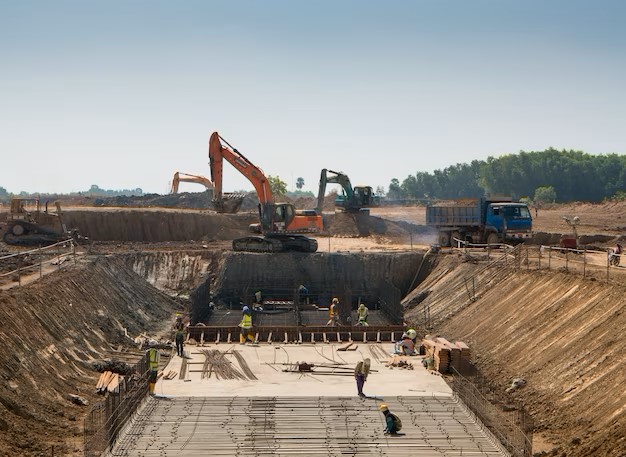
Road Construction , Maintenance , Rehabilitation and Stormwater Drainages

Road Construction, Maintenance, Rehabilitation and Stormwater Drainage

Construction, Maintenance, Drainage, Asphalt, and Safety for Road Infrastructure

|
Platform:
Online
In-class
Revised and Updated: 23 October 2026
Date Venue Duration
13 - 15 January 2027 Sandton, Gauteng 3 Days
17 - 19 March 2027 Sandton, Gauteng 3 Days
28 - 30 April 2027 Sandton, Gauteng 3 Days
05 - 07 July 2027 Sandton, Gauteng 3 Days

Course Introduction

Roads are the main means of travel and trade for communities, and they link economic activity to everyday life. They represent very large public investments and are expected to serve for decades. Road condition has a direct effect on vehicle operating costs, travel times, and safety, so proper construction and maintenance means more reliable transport at lower cost.


The sector now faces serious pressure. SANRAL has told Parliament that more than 80% of the national network has passed its original design life, that heavy traffic and prolonged rain are speeding up pavement damage, and that routine maintenance alone is no longer enough to sustain the network. Floods in recent seasons have damaged roads, culverts, and bridges across several provinces, and many provincial and municipal roads were built for much lower flood standards than national roads. Time on the road for repair and rehabilitation is also getting shorter, so work must be done faster, safer, and to a higher quality.


This three-day course gives municipal workers, supervisors, inspectors, contractors, and technicians a practical understanding of how roads are built, drained, maintained, and repaired. It covers the construction process, materials, compaction, and quality control; stormwater drainage; gravel and asphalt roads; pothole and surface repair; road furnishing and guardrails; road markings; safe working and traffic management at roadworks; and rehabilitation, recycling, and new technology. Participants are introduced to the current South African standards and guidelines, as well as to guidance used for roads across Africa, and they work through practical examples from the field.

Course Objectives

By the end of this Road Construction, Maintenance, Rehabilitation and Stormwater Drainage course, participants will be able to:

  • Use the terms and words of road construction correctly, and find the relevant current standards, specifications, and guidelines
  • Describe the main aspects of road construction, with attention to practical work on site
  • Understand compaction techniques and the bulking of materials, and the role of quality assurance and testing
  • Learn relevant and current application methods
  • Explain the properties of asphalt materials, the requirements for asphalt used in road construction, and the general guidelines for asphalt construction
  • Describe the premix asphalt surfacing process, from mixing and transport to paving and compaction
  • Describe the role of road maintenance in the broad context of provision, classification, and cost-effective application
  • Explain why adequate drainage is essential to road performance, and how it affects road maintenance, including in extreme rainfall
  • Identify common asphalt and gravel road defects and apply sound repair techniques, including pothole repair
  • Apply safe working practices, select and use protective clothing and equipment, and set up traffic management at roadworks
  • Understand the preparation and application techniques for road markings and symbols, including spray application
  • Understand the criteria for where guardrails are erected and their contribution to road safety

Who should attend?

  • Any personnel or municipal worker involved in the construction and maintenance of roads
  • Persons who wish to broaden their knowledge and understanding of aspects of road construction and maintenance
  • Municipal workers from various sections who need to understand road construction and maintenance
  • Civil Consulting Engineers and Technicians
  • Contractors, including small and emerging contractors
  • Construction Inspectors and Supervisors
  • Road Maintenance Supervisors
  • Relevant Government Departments and road authorities
  • Foremen and Artisans
  • Stormwater, drainage, and municipal engineering staff
  • Health and safety officers working on roadworks
Technical Courses

Training Methodology

Our diverse instructional approaches ensure effective learning:

– Lectures & Presentations: Engage with expert-driven, stimulating content.
– Course Material: Access well-crafted supporting resources.
– Group Work: Collaborate on discussions and case studies for practical insights.
– Workshops & Role-Play: Participate in immersive, scenario-based activities.
– Practical Application: Focus on applying theoretical knowledge in real situations.
– Post-Training Support: Receive extensive support after training for skill implementation.

Training Outline

Day 1 — Introduction, Construction Process, and Drainage
Module 1: Introduction to Road Construction and the Governing Standards
  • Defining the terms and words used in road construction
  • Requirements of a good road, and the preconditions for road building and maintenance
  • Resources and basic components of road construction
  • The road reserve and the roadbed explained, with visuals
  • Finding your way through the standards: the new COTO Standard Specifications for Road and Bridge Works (which replace the older COLTO specifications), the earlier TRH, TMH, and UTG guidelines, the South African Pavement Engineering Manual (SAPEM), and the SANRAL Drainage Manual
  • Guidance used for roads across Africa: Overseas Road Note 31 and the ReCAP guidelines for low-volume roads
  • Practical Exercise: find the relevant specification and guideline for five common road tasks
Module 2: The Road Construction Process
  • Construction management overview: technical planning and management of the process
  • Duties and job descriptions of road workers
  • Traffic loading and volumes: why they decide the design
  • Design for maintenance: building roads that can be maintained
  • Clearing the pathway: bush clearing, grubbing, and stripping of topsoil, and boulder removal
  • Preparation of gravel roads and the roadbed
  • Practical Exercise: plan the construction sequence for a short rural road, listing the resources needed at each stage
Module 3: Materials, Compaction, and Quality Assurance
  • Types of materials for construction and maintenance, and their safe handling
  • Compaction techniques, the bulking of materials, and how moisture affects both
  • Quality assurance and testing: what to test, how often, and what to do with the results
  • The effect of weather on roads and on construction work
  • Execution on site: reading from plans and drawings, visual assessment, layer works, confined and restricted areas, water handling, and subsoil drains
  • Case Study: a road layer that failed early because of poor compaction or moisture control, and how it could have been prevented
Module 4: Road Drainage and Stormwater
  • Definitions of drain systems, and the importance of good drainage for the roadway
  • Types of drainage structures and their uses: subsurface drains, catch-water drains, mitre drains, and scour checks
  • Culverts: sizing, gradient and angles, and installation of culvert pipes and other structures
  • Design flood standards: why national roads are designed for large floods while many provincial and municipal roads are not, and what that means for flood damage
  • Climate-resilient drainage: designing and maintaining for heavier rainfall, using guidance from the SANRAL Drainage Manual and the ReCAP climate adaptation handbook for African roads
  • Problems caused by improper drainage, and ways to solve them
  • Drainage system maintenance: inspection, cleaning, and repair before the rainy season
  • Case Study: a flood-damaged road: emergency repair first, permanent reconstruction later, and why reopening to heavy vehicles too soon on saturated layers can cause structural failure

Day 2 — Gravel and Asphalt Roads, Safety, and Maintenance
Module 5: Gravel Roads — Final Layers and Maintenance
  • Completing the final layers of a gravel road: off-loading, spreading, and compaction of gravel, and paving only when ready
  • Characteristics of a well-maintained gravel road
  • Gravel road maintenance problems: riding surface and crown, washboard, potholes, and drainage problems
  • Methods to repair gravel roads: patching, grading the surface, and secondary ditches
  • Grading ditches and drains, and the best timing and conditions for grading
  • Practical Exercise: assess photographs of gravel road defects, identify each cause, and choose the repair
Module 6: Asphalt Roads — Materials, Mixing, and Paving
  • Principles and properties of asphalt: aggregate, binder, and voids
  • Why well-compacted asphalt sheds water, and how water gets in and damages it
  • Asphalt used in road construction, and the requirements of the mix
  • General guidelines for asphalt construction, including the Sabita guidelines for asphalt design and construction
  • Preparation of paving asphalt mixtures
  • Asphalt transport, temperature control, and safe handling
  • The paver, the screed, and rolling: joints, layer thickness, and finishing
  • New asphalt developments: warm mix, recycled asphalt, and modified binders
  • Practical Exercise: check a paving plan for temperature, thickness, joint, and compaction risks
Module 7: Safe Working Practices and Traffic Management at Roadworks
  • Hazards in road construction and maintenance: physical hazards (traffic, plant, noise, dust, heat) and chemical hazards (hot bitumen, fuels, and solvents)
  • Health and safety law for construction work: the Occupational Health and Safety Act, the Construction Regulations, and the new draft regulations published for comment in 2025
  • Reducing risk: risk assessments, safe work procedures, and protective clothing and equipment
  • Road signs and traffic management at roadworks, based on the South African Road Traffic Signs Manual (Volume 2, Chapter 13, road works signing)
  • The layout of a work zone: advance warning, transition, work, and termination areas
  • Flagging guidelines: positioning, signals, communication between flagmen, and training
  • Temporary traffic lights, barriers, and daily checks of signs and equipment
  • Practical Exercise: draw a traffic management layout for a lane closure and check it against the signing manual
Module 8: Road Maintenance Management
  • Road conditions and road safety
  • The role of road maintenance: provision, classification, and cost-effective application
  • Classification of maintenance: routine, recurrent, periodic, and urgent
  • Preventive maintenance: keeping the surface sealed to slow structural decline
  • Condition assessment: visual inspections, and how road authorities use survey vehicles and data to plan maintenance
  • Planning and budgeting for maintenance, and what happens when it is deferred
  • Using local labour and small contractors in maintenance work
  • Practical Exercise: classify a list of defects into routine, recurrent, periodic, and urgent maintenance, and rank them for action

Day 3 — Asphalt Distress, Road Furnishing, Safety, and New Technology
Module 9: Asphalt Pavement Distress and Repair
  • Principles of asphalt pavement distress
  • General repairs and types of asphalt road maintenance: rutting, transverse and other cracks, edge damage, and patches and potholes
  • Asphalt surface patching
  • Pothole repair technique and the steps for a surface patch repair
  • Common pothole repair failures, and how to avoid them
  • Choosing between a temporary and a permanent repair, and between hot and cold mix
  • Case Study: repeat pothole failures on the same road, with the causes traced back to preparation, material, or drainage
Module 10: Road Furnishing, Guardrails, and Ancillary Works
  • Road signs and minor concrete structures
  • Drainage and erosion protection
  • Guardrails: the criteria for where they are erected, their contribution to safety, and their finishing, end treatments, and repair after impact
  • Drainage maintenance and structure maintenance
  • Traffic facilities maintenance and road reserve maintenance
  • Practical Exercise: assess a road section and decide where guardrails are justified, and where they are not
Module 11: Road Markings and Road Symbols
  • Types of road markings and their purpose, as set out in the South African Road Traffic Signs Manual
  • Marking materials and visibility: paint, thermoplastic, and glass beads
  • Instructions for applying road markings: surface preparation, setting out, and spray application
  • Pavement marking removal
  • Safety guidelines when painting roads, including traffic control and the handling of materials
  • Practical Exercise: practise the preparation and setting out of a road symbol, and review the safety steps
Module 12: Rehabilitation, Recycling, New Technology, and Sustainability
  • Rehabilitation and recycling of road materials, including reclaimed asphalt
  • New technology in road construction and maintenance: data-collection vehicles and condition models, drones, intelligent compaction, and digital records
  • Sustainability considerations: material use, energy, and climate resilience
  • Road safety issues in construction and maintenance: policies and procedures
  • Course wrap-up: group work consolidating the key practices covered over the three days
  • Practical Exercise: group work: prepare a short maintenance and drainage plan for a road section, applying the practices from all three days

Course Categories

Get a Quote Banner Outline

Request a Call Back

Your submission has been successful

Please check your email for confirmation

Success Stories

Discover how our courses enhance professionals’ effectiveness in their workplaces.

No reviews found. Add reviews from the dashboard or switch source to Manual.

FAQs – Road Construction, Maintenance, Rehabilitation and Stormwater Drainage

Master road construction, maintenance, rehabilitation, and stormwater drainage practices, learning effective construction methods, pavement maintenance, rehabilitation techniques, drainage solutions, quality control, and sustainable infrastructure management.

What topics are covered in the Road Construction, Maintenance, Rehabilitation and Stormwater Drainage training?
The course covers flexible and rigid pavement design, road construction techniques, pavement distress identification, routine and preventive maintenance, rehabilitation strategies, hydrology and hydraulic design, stormwater drainage systems, culvert and pipe installation, and environmental impact management.
Who should attend the Road Construction, Maintenance, Rehabilitation and Stormwater Drainage training?
This course is designed for civil engineers, municipal infrastructure managers, road maintenance engineers, site supervisors, project managers, public works officials, and contractors involved in transportation infrastructure and drainage planning.
What skills will delegates develop through the Road Construction, Maintenance, Rehabilitation and Stormwater Drainage training?
Delegates develop practical skills in assessing pavement condition, selecting optimal rehabilitation methods, designing effective surface and subsurface drainage systems, managing road asset lifecycles, and overseeing quality control during construction and repairs.
How long does the Road Construction, Maintenance, Rehabilitation and Stormwater Drainage training take to complete?
The training is delivered as a focused short-course programme, with the duration determined by the scheduled programme and the specific training requirements of the organisation.
Is the Road Construction, Maintenance, Rehabilitation and Stormwater Drainage training suitable for municipal technical teams?
Yes. The training is tailored for municipal and public sector infrastructure personnel focused on cost-effective road asset preservation, storm management, and sustainable infrastructure maintenance.
Can Prospen Africa deliver the Road Construction, Maintenance, Rehabilitation and Stormwater Drainage training in-house?
Yes. Prospen Africa can customise the course around your organisation's local road standards, specific soil and climate conditions, regional drainage challenges, and active infrastructure projects.

Related Courses

Your submission has been successful

Please check your email for confirmation