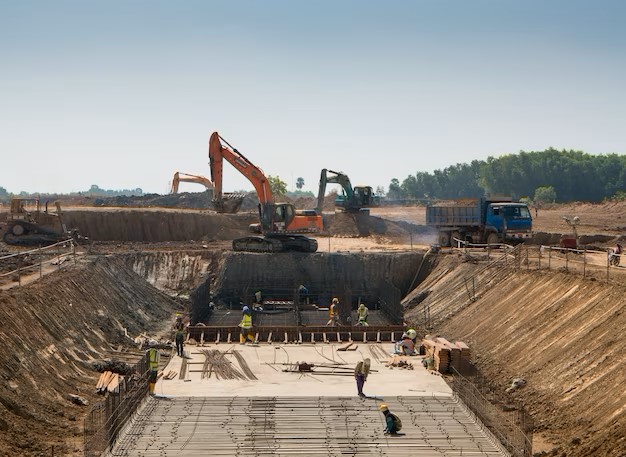
Construction Safety and Quality Management

Construction Safety and Quality Management

Risk Management, ISO 9001:2015, ISO 45001, and BIM for Safer, Higher-Quality Construction Projects

Claim 3 CPD Points

|
Platform:
Online
In-class
Revised and Updated: 23 October 2026
Date Venue Duration
26 - 30 October 2026 Sandton, Gauteng 5 Days
09 - 13 November 2026 Pretoria, Gauteng 5 Days
16 - 20 November 2026 Sandton, Gauteng 5 Days
08 - 12 February 2027 Polokwane, Limpopo 5 Days
22 - 26 February 2027 Sandton, Gauteng 5 Days

Course Introduction

The purpose of this Construction Safety and Quality Management course is to build knowledge, understanding, and competency in the theories and practices that underpin safe, well-managed construction projects. The course introduces delegates to construction safety and health, the importance of jobsite safety, occupational health in construction, and the theory of accidents, before working through the management of safety and health on site through the lenses of risk management, ISO 9001 quality principles, and ISO 45001 occupational health and safety principles.


The course also introduces the concept of quality, including product and process quality and quality culture, together with the principles and application of construction quality management, Total Quality Management (TQM), and the tools and techniques used to monitor and improve quality on site. Delegates are guided through ISO 9001:2015 — its principles, clauses, and the documentation and audit procedures that keep a quality management system effective — and through practical quality-control activities such as document control, inspection and test planning, and the handling of nonconformances and corrective actions.


Finally, the course introduces Building Information Modelling (BIM) as a solution for enhancing safety and quality management on construction sites, covering how model-based coordination, clash detection, and digital documentation reduce rework, site hazards, and quality failures across the project lifecycle.

Course Objectives

On successful completion of the Construction Safety and Quality Management course, delegates will be able to:

  • Understand the need and importance of safety management in construction projects
  • Identify safety-related responsibilities among project stakeholders and allocate responsibility for jobsite safety and health
  • Perform a safety risk analysis using various risk assessment methods
  • Implement worker health and safety processes and procedures through the development of site safety plans, and help build a culture of safety
  • Identify hazardous conditions on a construction site and classify the common causes and costs of accidents
  • Suggest mitigation plans using safety best practices and techniques
  • Interpret ISO 45001 occupational health and safety management system principles and clauses, and understand its relationship to the superseded OHSAS 18001 standard
  • Understand the need and importance of quality management in construction projects and the major quality theories and philosophies
  • Prepare project quality management plans, including inspection and test plans
  • Interpret ISO 9001:2015 quality management principles, clauses, and documentation requirements
  • Apply document control, nonconformance management, and corrective action processes to reduce quality costs and rework
  • Interpret Building Information Modelling’s (BIM) role in enhancing safety and quality on construction sites

Who should attend?

This Construction Safety and Quality Management course is suitable for professionals involved in the construction industry who want to strengthen their understanding and skills in safety management, quality management, and the integration of innovative building technologies.

This includes but is not limited to:

  • Workers
  • Foremen and Site Supervisors
  • Middle Managers
  • Top Management
  • Contractors and Sub-Contractors
  • Project Owners and Developers
  • Safety Officers and Personnel
  • Quality Assurance and Quality Control (QA/QC) Personnel
  • Project and Construction Managers
  • Civil and Construction Engineers
Technical Courses

Training Methodology

Our diverse instructional approaches ensure effective learning:

– Lectures & Presentations: Engage with expert-driven, stimulating content.
– Course Material: Access well-crafted supporting resources.
– Group Work: Collaborate on discussions and case studies for practical insights.
– Workshops & Role-Play: Participate in immersive, scenario-based activities.
– Practical Application: Focus on applying theoretical knowledge in real situations.
– Post-Training Support: Receive extensive support after training for skill implementation.

Training Outline

Module 1 — Construction Safety Management
  • Introduction to construction safety and health
  • Importance of jobsite safety and occupational health in construction
  • Theory of accidents, classification of accidents, and the true cost of accidents
  • Problem areas in construction safety and common root causes of incidents
  • Elements of an effective safety programme
  • Jobsite safety assessment and safety risk analysis methods
  • Safety meetings, toolbox talks, and safety incentive schemes
  • Safety clauses in construction contracts and safety record keeping
  • Building and sustaining a safety culture on site
  • Safety responsibilities across the project team: workers, foremen, middle managers, top management, sub-contractors, owners, safety personnel, and subcontractors
Module 2 — Occupational Health and Safety Management Systems
  • From OHSAS 18001 to ISO 45001: understanding the transition to the current international OH&S standard
  • ISO 45001 principles, structure, and key clauses
  • Hazard identification, risk assessment, and determining controls
  • Legal and other compliance requirements
  • Project HSE management: processes, techniques, and site implementation
  • Site safety plans and emergency preparedness and response
  • Incident investigation and corrective action for safety events
  • Practical Exercise: developing a site-specific risk assessment and mitigation plan
Module 3 — Quality Management Fundamentals
  • Introduction to construction quality: definitions, history, and quality philosophies
  • Product quality, process quality, and quality culture
  • Quality costs and cost reduction in construction projects
  • Total Quality Management (TQM): principles, cost of total quality, and continuous improvement
  • Management tools and techniques for quality, and supporting the quality improvement process
  • Preparing project quality management plans and inspection and test plans (ITPs)
Module 4 — ISO 9001:2015 and Construction Quality Control
  • Introduction to ISO 9001:2015: principles, structure, and key clauses
  • Document control and management of quality records
  • Design control, procurement instructions, procedures, and drawings
  • Control of purchased materials, equipment, and services
  • Identification and traceability of materials, parts, and components
  • Control of special processes, measurement, and test equipment
  • Inspection, test control, and handling, storage, and shipping requirements
  • Managing nonconforming materials, parts, and components
  • Corrective and preventive action processes
  • Quality assurance records and internal quality audits
  • Practical Exercise: reviewing a nonconformance report and drafting a corrective action plan
Module 5 — Building Information Modelling vs. Safety and Quality
  • Use of Innovative Building Technologies (IBTs) on construction sites and their safety and quality consequences
  • Project integration and the Integrated Project Delivery (IPD) concept
  • The Building Information Modelling (BIM) concept and its project lifecycle applications
  • Using BIM for clash detection, hazard identification, and site logistics planning
  • BIM-enabled quality control: digital inspection records, as-built verification, and reduced rework
  • Case studies from BIM implementation around the world and their safety and quality consequences

Course Categories

Get a Quote Banner Outline

Request a Call Back

Your submission has been successful

Please check your email for confirmation

Success Stories

Discover how our courses enhance professionals’ effectiveness in their workplaces.

No reviews found. Add reviews from the dashboard or switch source to Manual.

FAQs – Construction Safety and Quality Management

Strengthen construction safety and quality management skills covering risk assessment, site safety, quality control, compliance, inspections, incident prevention, and continuous improvement.

What is covered in the Construction Safety and Quality Management Training?
The course covers construction safety management, occupational health, hazard identification, risk assessment, quality management, site inspections, safety programmes, incident prevention, quality control, and continuous improvement.
Who should attend the Construction Safety and Quality Management Training?
The training is suitable for construction managers, project managers, site managers, supervisors, engineers, safety and quality personnel, contractors, consultants, and professionals responsible for construction project safety and quality.
Does the course cover construction safety risk assessment?
Yes. Participants learn about construction hazards, safety risk assessment, jobsite safety inspections, common causes of incidents, risk controls, safety meetings, toolbox talks, and implementing effective safety programmes.
Does the training cover construction quality management?
Yes. The programme addresses quality management principles, quality planning, quality control, inspections, quality assurance, construction standards, documentation, non-conformances, and continuous quality improvement.
Does the course cover safety and quality inspections?
Yes. Participants examine practical approaches to site inspections, identifying unsafe conditions and quality defects, documenting findings, monitoring corrective actions, and maintaining construction safety and quality standards.
Does the Construction Safety and Quality Management course include practical activities?
Yes. The training uses practical exercises, case studies, group activities, discussions, workshops, and workplace-based scenarios to help participants apply safety and quality management principles on construction projects.

Related Courses

Your submission has been successful

Please check your email for confirmation