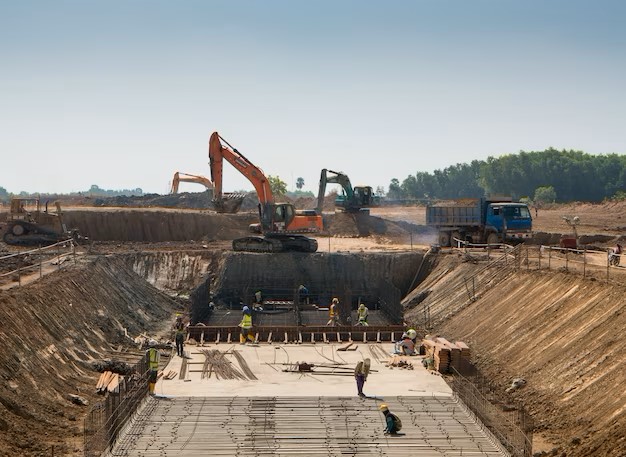
This Prospen Africa Food Security and Sustainability training course is structured to deepen understanding and foster skill development in food security and sustainable agriculture, in line with Prospen Africa’s focus on food and nutrition security and agricultural development. Participants engage in practical problem-solving, addressing critical issues in agriculture and food security through innovative, evidence-based strategies.
The course provides a comprehensive introduction to the concepts of food security and sustainability within food production systems, built around the recognised framework of availability, access, utilisation, and stability. It offers insight into agriculture-related sustainability and systems thinking, equipping delegates to craft more effective, targeted interventions for food production and policy.
Course Objectives
Upon completion of this Food Security and Sustainability Training course, delegates will be able to:
Understand food security’s reliance on the four pillars of availability, access, utilisation, and stability
Evaluate the sufficiency and long-term viability of different food production systems
Apply systems thinking to the environmental sustainability of food production
Develop an action plan for sustainability goals, including contributing to the transition to net-zero emissions in agriculture
Understand market dynamics at various levels and their impact on food access
Address how politics, policy, and governance intersect with food access and distribution
Identify key contributors to food security across household, national, and global scales
Apply analytical skills to food access decision-making and the design of interventions targeting poverty and malnutrition
Build a framework for market-driven growth that emphasises public-private partnerships and government collaboration
Integrate cross-cutting sustainability themes into strategic planning for food systems
Who should attend?
The Food Security and Sustainability training course is ideal for:
Individuals concerned with the implications of climate change and global warming and seeking sustainable agricultural and corporate strategies
Professionals interested in innovation and design for long-term organisational and agricultural resilience
Those aiming to transform agricultural and business models sustainably while leading towards a net-zero future
Government, NGO, and development sector professionals working on food security, nutrition, or rural development programmes
Individuals with backgrounds in Geography, Health Science, Biology, Horticulture, Plant Physiology, Soil Science, Zoology, or related fields
Agricultural extension officers, agribusiness professionals, and policy makers
Training Methodology
Our diverse instructional approaches ensure effective learning:
– Lectures & Presentations: Engage with expert-driven, stimulating content. – Course Material: Access well-crafted supporting resources. – Group Work: Collaborate on discussions and case studies for practical insights. – Workshops & Role-Play: Participate in immersive, scenario-based activities. – Practical Application: Focus on applying theoretical knowledge in real situations. – Post-Training Support: Receive extensive support after training for skill implementation.
Training Outline
Day 1
Module 1 — Agricultural Technology, Poverty, and Rural Development
The role of agricultural technology in reducing rural poverty
Food safety fundamentals across the production and supply chain
Global rural development: challenges and opportunities
Module 2 — Global Food and Agricultural Challenges
Managing global soils amidst climate change
Identifying and prioritising applied research requirements for food security interventions
Developing and scoping an applied project to address a real-world food security or agricultural challenge
Practical Exercise: scoping an applied food security project for a delegate-selected context
Day 2
Module 3 — Small-Scale Agriculture
Local food supply strategies and smallholder production systems
Sustainable business planning for small-scale agricultural enterprises
Entrepreneurial approaches to agriculture and market access for smallholders
Module 4 — Sustainable Business Organisation
Natural systems management and its integration into agribusiness strategy
Climate change adaptation for agricultural enterprises
Overall sustainability as a core organisational objective
Case Study: a sustainable agribusiness model and the adaptation strategies it employed
Day 3
Module 5 — Advanced Cropping Techniques
Exploring crop productivity potentials and intensification strategies
Addressing water constraint issues in agriculture, including water-use efficiency
Module 6 — Overcoming Nutrient Limitations in Production
Diagnosing and addressing soil nutrient limitations in crop production
Fertiliser management and nutrient-use efficiency
Balancing productivity gains with long-term soil health
Practical Exercise: diagnosing a nutrient-limitation scenario and proposing a correction strategy
Day 4
Module 7 — Environmental Innovation in Agriculture
Agricultural technology and innovation for environmental sustainability
Environmental technology applications in food production
Managing complexity in sustainable livestock agriculture
Module 8 — Process Management in Food Production
Process management principles applied to food production systems
Productivity metrics in food production and how to track them
Practical Exercise: defining a set of productivity and sustainability metrics for a food production process
Day 5
Module 9 — Assessing Environmental Impact in Food Production
Comparing and interpreting sustainability indices used in food production
Integrating environmental impact assessment through case studies
Case Study: comparing the environmental footprint of two food production systems
Module 10 — Accessibility to Households
Distribution of food resources from production to household level
Market operations by local traders and their role in food access
National policy impacts on food distribution and affordability
Group Exercise: mapping the food distribution pathway and policy levers for a delegate-selected context
What is covered in the Food Security and Sustainability Training?
The course covers food security, sustainable agriculture, food production systems, agricultural technology, rural development, climate change, food access, sustainability planning, environmental impacts, and food distribution.
Who should attend the Food Security and Sustainability Training?
The training is suitable for government, NGO and development professionals, agricultural extension officers, agribusiness professionals, policy makers, and individuals from agriculture, geography, health science, biology, horticulture, plant physiology, soil science, zoology, and related fields.
Does the course cover the four pillars of food security?
Yes. Participants explore the four pillars of food security: availability, access, utilisation, and stability, and examine how these factors influence food production, access, nutrition, and long-term food security.
Does the training cover sustainable agriculture and climate change?
Yes. The programme examines sustainable agricultural practices, climate change adaptation, soil health, water-use efficiency, nutrient management, environmental innovation, and strategies supporting more resilient food production systems.
Does the course address food access, markets and policy?
Yes. Participants examine market dynamics, smallholder market access, food distribution, local traders, government collaboration, public-private partnerships, and the role of policy and governance in food access and affordability.
Does the Food Security and Sustainability Training include practical exercises?
Yes. The training includes applied project scoping, nutrient-limitation exercises, sustainability and productivity metrics, environmental impact case studies, food distribution mapping, group work, workshops, and practical application.