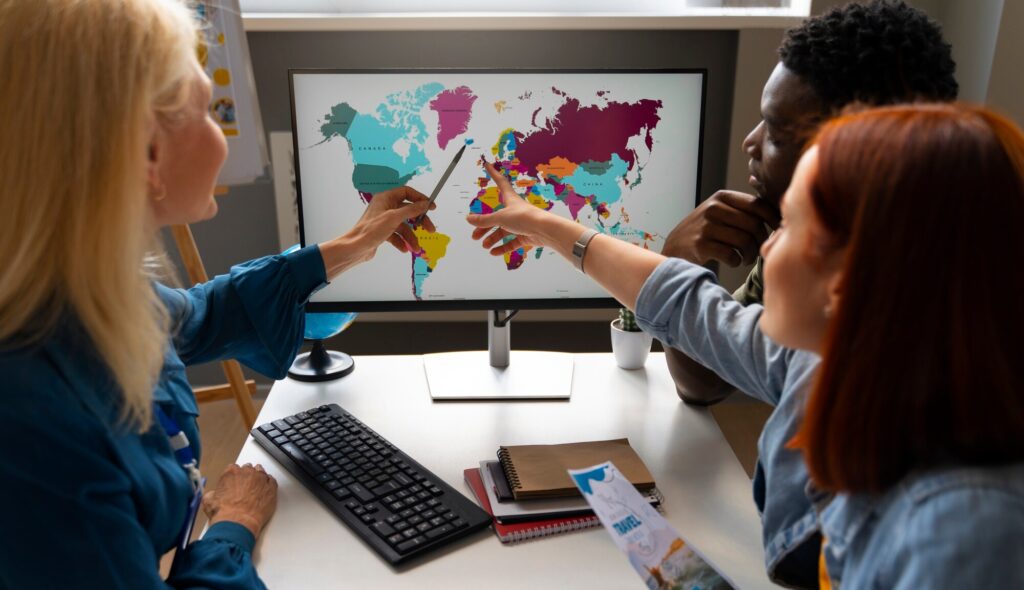
Prospen Africa’s “Public Relations, Protocol, and Travel Management” course is designed to equip professionals with essential skills in strategic public relations, protocol management, and travel logistics. Participants will gain insights into effectively managing public relations channels, crafting impactful media content, and organising successful PR events.
The Public Relations, Protocol, and Travel Management Training course also covers crucial aspects of travel management, including documentation, accommodation, and international protocol, ensuring participants can meet the demands of modern business travel. Through hands-on modules, attendees will learn to navigate complex PR challenges, apply AI-assisted tools across content creation, audience research, and travel logistics, and optimise budgeting for enhanced organisational success.
Course Objectives
Upon completion of this Public Relations, Protocol, and Travel Management training course, participants will be able to:
Enhance existing knowledge of strategic public relations
Apply tactical skills required in strategic public relations, including AI-assisted content and audience tools
Leverage developments in technology across PR and travel management
Manage key aspects of protocol
Gain tips, tools, and techniques for arranging business travel, including AI-assisted booking and itinerary tools
Meet the expectations of those involved in protocol and travel arrangements
Who should attend?
Protocol Officers
Travel Officers and Travel Executives
Public Relations Officers, Executives, and Researchers
Those Responsible for Protocol, Travel, and Accommodation
Individuals in PR Within Public, Private, and Not-for-Profit Sectors
Professionals in PR at National, Regional, and Community Levels
Employees of International, Global, or Supranational Organisations
Training Methodology
Our diverse instructional approaches ensure effective learning:
– Lectures & Presentations: Engage with expert-driven, stimulating content. – Course Material: Access well-crafted supporting resources. – Group Work: Collaborate on discussions and case studies for practical insights. – Workshops & Role-Play: Participate in immersive, scenario-based activities. – Practical Application: Focus on applying theoretical knowledge in real situations. – Post-Training Support: Receive extensive support after training for skill implementation.
Training Outline
Module 1: Introduction to Public Relations
Definition and key elements of Public Relations
Importance, benefits, and challenges of PR management
Distinction between PR, marketing, advertising, and sales
Pros and cons of various PR options
The significance of internal PR
Module 2: PR Channels
Role and future of print media in PR
Impact of television, radio, and the power of voice
Mobile technology and accessibility
Growth, complexity, and impact of social media and multimedia
Using AI-powered social media monitoring and listening tools to track PR impact in real time
Module 3: Writing for Media
Crafting compelling stories, and capturing and maintaining reader attention
Writing for print: marketing materials, news, features, editorial, and letters
Creating effective press releases, using AI writing tools to accelerate first drafts while preserving your organisation's voice
Writing for electronic media
Module 4: Target Markets and Audience Analysis
Understanding target audiences and stakeholders
Analysing competitors and their success
Conducting research to identify audience preferences, including AI-assisted sentiment and trend analysis
Strategies for reaching target audiences
Common pitfalls in messaging and content
Module 5: PR Events and Activities
Organising and delivering presentations
Media visits to your organisation
Lobbying: benefits, risks, and impact
Maximising ROI from sponsorships
Corporate social responsibility initiatives
Module 6: Travel Documentation and Procedures
Managing passports, visas, and immigration compliance
Ensuring health, safety, and security
Booking tickets, managing schedules, and handling cancellations, including AI-assisted travel booking and itinerary tools
Navigating airport procedures and duties
Module 7: Accommodation and Travel Management
Selecting and booking hotels
Meeting customer and protocol requirements
Managing transport logistics: cars, tolls, parking, rentals, security
Handling business travel demands: payments and exchange rates
Researching and prioritising travel options
Module 8: Organising Events and Visits
Planning events, conferences, and visits
Organising and attending exhibitions
Protocol for trade visits
Greeting foreign dignitaries and managing ceremonial precedence
Module 9: Budgeting and Cost Control
Accurate and meaningful budgeting
Monitoring expenses and managing approvals, including AI-assisted expense tracking and anomaly flagging
Ensuring legitimate expenses and cost control
Handling cancellations, claims, and reimbursements
Discover how our courses enhance professionals’ effectiveness in their workplaces.
INSETA
The Evolving Role of Executive Assistants and AI Conference
Thank you for offering us the opportunity to attend this course. The Facilitator was very informed, and have learned a lot of AI tools which I will use at my workplace.
FAQs – Public Relations, Protocol, and Travel Management Training
Develop practical skills in public relations, professional protocol, stakeholder engagement, and travel management for effective organisational representation and coordination.
What topics are covered in the Public Relations, Protocol and Travel Management course?
The course covers strategic public relations, media communication, PR writing, target audience analysis, event management, protocol, travel documentation, accommodation planning, transport logistics, international etiquette, budgeting, and travel cost control.
Who should attend the Public Relations, Protocol and Travel Management course?
This course is designed for protocol officers, travel officers, travel executives, public relations officers, PR practitioners, administrative professionals, and employees responsible for protocol, travel, accommodation, events, and stakeholder engagement.
Does the course cover international protocol and business travel requirements?
Yes. Delegates learn practical approaches to managing travel documentation, passports, visas, immigration requirements, accommodation, transport arrangements, airport procedures, international protocol, and engagements involving foreign dignitaries.
What public relations skills will delegates develop during the course?
Delegates develop skills in strategic PR planning, managing communication channels, writing media content and press releases, analysing target audiences, organising PR events, engaging stakeholders, and using technology to support public relations activities.
Does the course include travel budgeting and cost management?
Yes. The training covers travel budgeting, monitoring expenses, managing approvals, cost control, cancellations, reimbursements, insurance considerations, and practical techniques for organising cost-effective business travel.
Can Prospen Africa deliver the Public Relations, Protocol and Travel Management course as customised in-house training?
Yes. Prospen Africa can customise the training around your organisation's PR strategy, protocol requirements, travel policies, event procedures, communication standards, budgeting processes, and the specific responsibilities of your team.