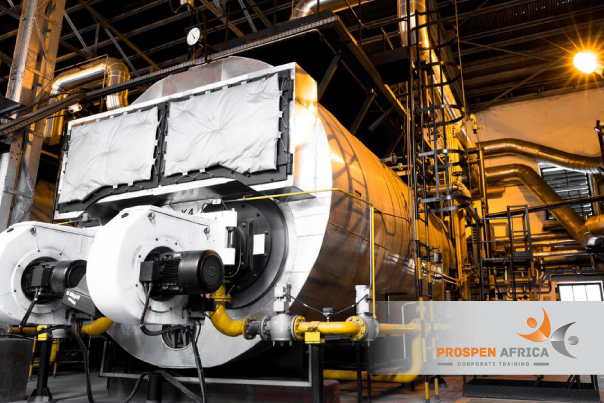
The reliability of any plant and its assets depends on effective maintenance. To ensure this, risks should be measured, and appropriate strategies and techniques applied to prevent asset failures. A variety of RBM techniques and strategies are available to enhance plant performance and prevent asset breakdowns. These strategies contribute to profitability by implementing cost-effective plans and procedures that help identify, assess, and manage risks effectively. Knowledge and application of RBM techniques are essential for extending asset life and improving organisational profitability.
Our expert instructors bring hands-on experience in RBM (Risk-Based Maintenance), offering focused and effective content that is aligned with current industry trends and technologies. This Risk-Based Maintenance (RBM) Techniques, Strategy, and Applications course empowers participants to enhance their careers and contribute effectively within their organisations.
Course Objectives
This Risk-Based Maintenance (RBM) Techniques, Strategy, and Applications course will help participants achieve the following objectives:
Understand RBM Methodology: Gain a comprehensive understanding of RBM, its methodology, and program applications, including the API RP 691 standard for Risk-Based Machinery Management.
Integrate RBM in Maintenance: Learn how RBM enhances maintenance practices and performance.
Assess and Manage Risk: Grasp risk assessment, planning based on failure probabilities, system behaviour, and impact.
Select Appropriate Technology: Identify the right technologies for specific scenarios.
Integrate RBM with Other Techniques: Effectively combine RBM with techniques such as RBI (API 580) and PFA.
Utilise Key Performance Indicators (KPIs): Leverage KPIs such as risk reduction, unplanned downtime, inspection effectiveness, and maintenance cost per risk unit for performance improvement.
Apply RBM Best Practices: Learn best practices for RBM application in asset management.
Participants focused on Risk-Based Maintenance RBM Techniques Strategy and Applications Training typically include:
Quality Engineers
Maintenance Managers
Reliability Engineers
Corrosion Engineers
Asset Integrity Managers
Compliance Officers
Facilities Planning Analysts
Maintenance Engineers
Engineering Professionals
Production Heads
Facility Managers
Asset Supervisors and Coordinators
Quality Control Analysts
Mechanical Engineers
Individuals Interested in RBM Aiming to Excel in This Field
Training Methodology
Our diverse instructional approaches ensure effective learning:
– Lectures & Presentations: Engage with expert-driven, stimulating content. – Course Material: Access well-crafted supporting resources. – Group Work: Collaborate on discussions and case studies for practical insights. – Workshops & Role-Play: Participate in immersive, scenario-based activities. – Practical Application: Focus on applying theoretical knowledge in real situations. – Post-Training Support: Receive extensive support after training for skill implementation.
Training Outline
Module 1: Introduction to RBM
Definition and importance of RBM, including the API RP 691 standard for Risk-Based Machinery Management, which extends risk-based principles across the full equipment lifecycle from design through decommissioning
Historical background and advancements
Module 2: Understanding Risk in Maintenance
Defining and identifying risks
Types of risks and risk analysis in maintenance
Module 3: Maintenance and Reliability
Impact of maintenance on business performance
Asset depreciation and failure types
Strategies for extending asset life
Module 4: Essential Engineering Tools
Overview of RAMS (Reliability, Availability, Maintainability, and Safety)
Cost-benefit decisions in maintenance
Risk matrices
Module 5: Strategy Development
High Impact-High Priority (HI-HP)
Low Impact-High Priority (LI-HP)
High Impact-Low Priority (HI-LP)
Low Impact-Low Priority (LI-LP)
Run-to-Failure and monitoring approaches
Module 6: RBM Attributes
Learning curve in RBM
Assessing risk and balancing failure consequences with probabilities
Module 7: RBM Techniques
Criticality (Risk) Analysis, FMEA, FCA
Event Tree and Fault Tree Analysis
Key concepts: Asset Utilisation Index, Strategic Importance, and Criticality Matrix
Module 8: RBM Implementation
Seven steps of RBM with FMECA integration
Maintenance task identification and Weibull distribution
Module 9: Equipment-Specific Implementations
Decision support tools for task optimisation
Condition monitoring, testing, and inspection
Module 10: Technology Integration
Coordinating spare parts, facilities, and tools with maintenance workflows
Integrating RBM with Risk-Based Inspection (API 580) and Potential Failure Analysis (PFA)
Module 11: Developing Plans and Procedures
Task optimisation
Action planning for diverse scenarios
Continuous improvement through data monitoring
Module 12: Key Performance Indicators (KPIs)
Defining KPIs, their importance, and benefits
Applying RBM-specific KPIs, including risk reduction, unplanned downtime, inspection effectiveness, and maintenance cost per risk unit
Discover how our courses enhance professionals’ effectiveness in their workplaces.
No reviews found. Add reviews from the dashboard or switch source to Manual.
FAQs – Risk-Based Maintenance (RBM) Techniques, Strategy and Applications Training
Explore Risk-Based Maintenance (RBM) techniques, strategies, and applications covering risk assessment, maintenance optimisation, asset reliability, criticality, and lifecycle performance.
What is covered in the Risk-Based Maintenance (RBM) Techniques, Strategy and Applications Training?
The Risk-Based Maintenance RBM Techniques Strategy and Applications Training covers RBM methodology, risk assessment, maintenance and reliability, RAMS, risk matrices, criticality analysis, FMEA, FMECA, fault tree analysis, condition monitoring, RBM implementation and maintenance KPIs.
Who should attend Risk-Based Maintenance (RBM) training?
The Risk-Based Maintenance RBM Techniques Strategy and Applications Training is suitable for maintenance and reliability engineers, asset integrity managers, maintenance managers, quality engineers, corrosion engineers, facility managers, engineering professionals, production heads and asset supervisors.
Does the RBM course cover API RP 691?
Yes. The course introduces API RP 691 for Risk-Based Machinery Management and explains how risk-based principles can be applied across the equipment lifecycle, from design through decommissioning.
Does the Risk-Based Maintenance course cover FMEA and FMECA?
Yes. Participants learn how FMEA and FMECA support criticality and risk analysis, maintenance task identification and the development of risk-based maintenance strategies.
Does the RBM training cover Risk-Based Inspection (RBI)?
Yes. The course explains how RBM can be integrated with Risk-Based Inspection using API 580, as well as other techniques such as Potential Failure Analysis (PFA).
Does the Risk-Based Maintenance training include practical exercises?
Yes. The training includes group work, case studies, workshops, role-play and practical application activities, allowing participants to apply RBM techniques and strategies to real-world maintenance scenarios.